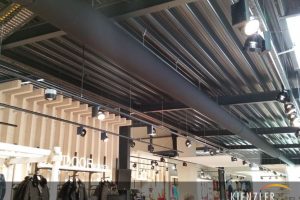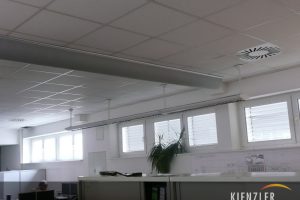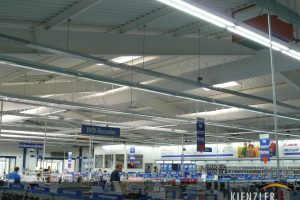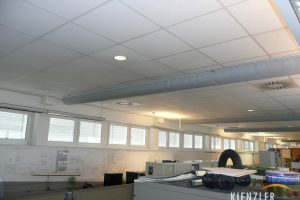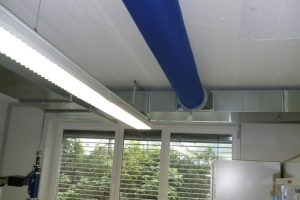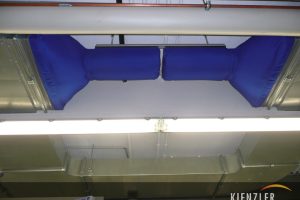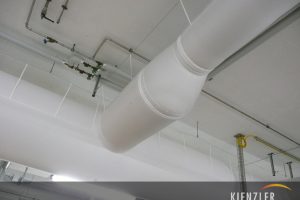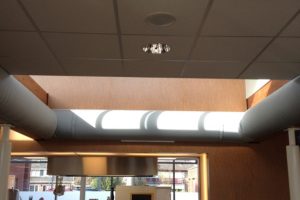

Wide range of applications

OPTIMUM CLIMATE FOR ALL REQUIREMENTS

Meets all requirements
air distribution, comfort climate,
Hygiene or assembly / maintenance.

PRECISE WITH EVERY
APPLICATION CASE

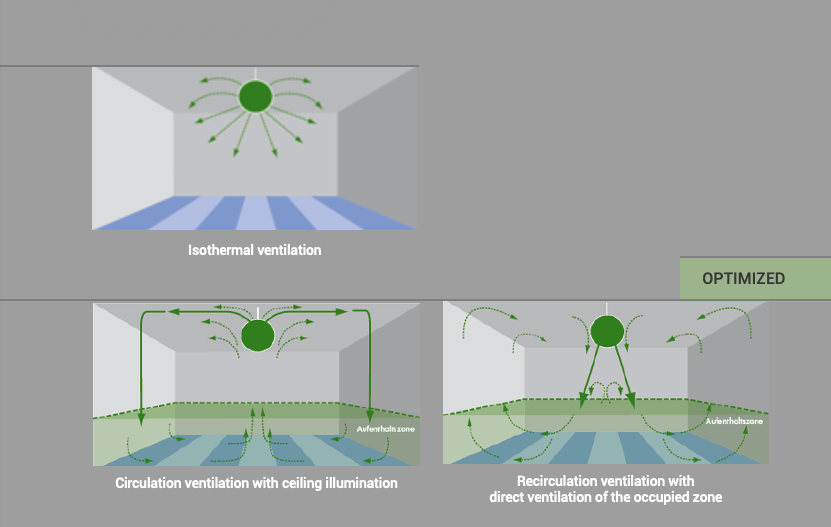
ISOTHERM

Air discharge: Fabric diffusion

Room ventilation through even air distribution
over the entire surface.

Air discharge: Fabric diffusion & directional

Room ventilation through targeted recirculation ventilation.

Air supply without temperature difference
for air exchange at constant room temperature.

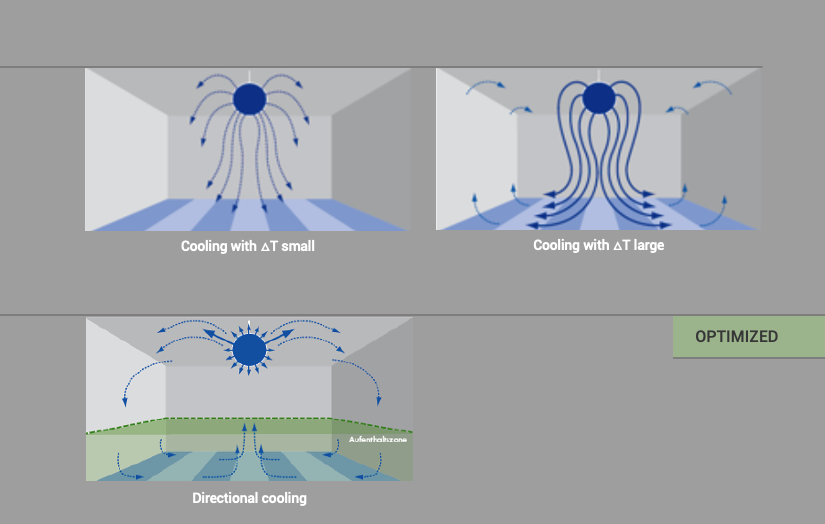
COOLING

Air discharge: Fabric diffusion

Room cooling through uniform air supply over the entire surface.
Air discharge: Fabric diffusion & directional

Uniform draught-free room cooling through targeted air distribution for an optimized room climate.

Air supply with negative temperature difference Cooling the Room temperature.

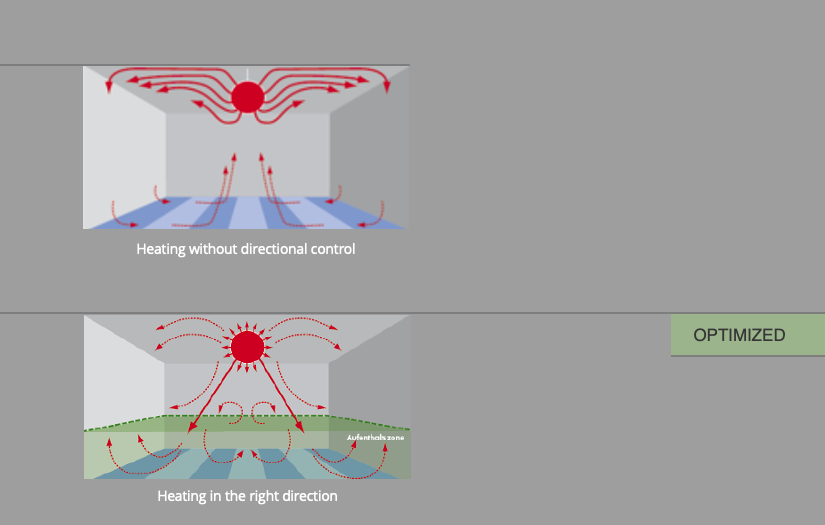
HEATING

Air discharge: Fabric diffusion

Room heating through uniform air supply over the entire surface.
Air discharge: Fabric diffusion & directional

Uniform air mixing through targeted air distribution for optimized heat distribution.

Air supply with positive temperature difference Heating of the Room temperature.

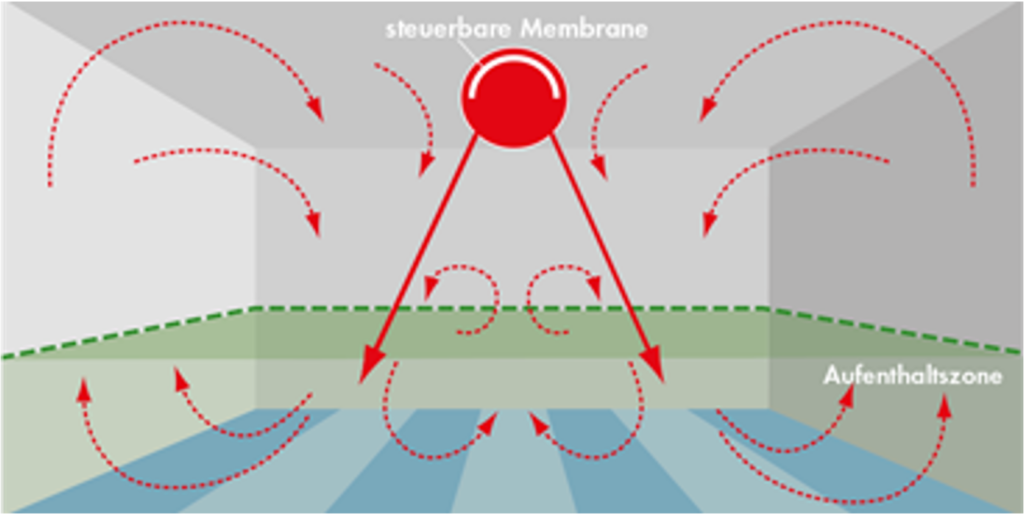
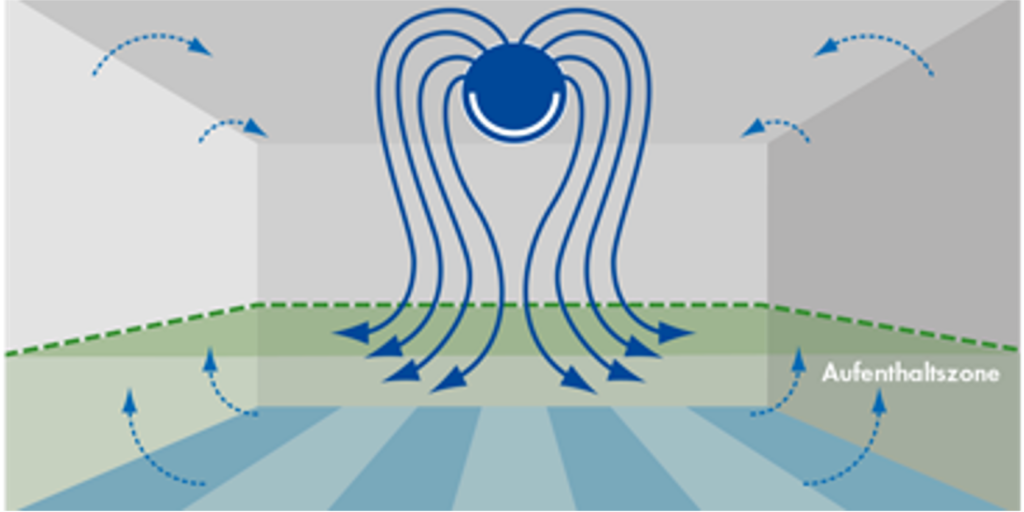
Heating and cooling in one

Depending on whether the system is operating in summer or winter, the actuator activates the corresponding heating or cooling mode.

Key feature:

The combination of fabric diffusion and directional perforation in one textile air distribution system enables both heating and cooling. This system cleverly utilizes the advantages of displacement ventilation and recirculation ventilation by switching between these two modes. The changeover between heating and cooling is controlled by an electromechanical actuator.

Depending on requirements, an integrated membrane within the tube allows either the upper or lower half of the hose to become impermeable to air. This means that in cooling mode, the cool air flows gently out of the upper half of the duct and slowly sinks to the floor without causing unpleasant draughts. When heating, on the other hand, the upper half of the duct is closed so that the warm air is directed downwards towards the floor for more efficient heat distribution and improved efficiency.

Actuator position: UP

Warm air is pressed downwards to achieve better mixing with the cooler air layer in the room.

Actuator position: DOWN

Cooled air is discharged upwards to achieve the widest possible distribution in the room.

Depending on whether the system is operating in summer or winter, the actuator activates the corresponding heating or cooling mode.

The advantages of displacement and recirculation ventilation are used alternately.

State-of-the-art simulations

STANDARD CASES

We have simulated the most important standard cases for you. We would like to clearly show you the uneven flow behavior of the air with different types of air conditioning.

OUR SERVICE

In many applications, the specialist planners are supported by professional simulation software. We use ANSYS Fluent in the numerical flow simulation (CFD). This allows indoor air flows to be simulated realistically and significantly supports the product development of textile air ducts.

THE RIGHT COMBINATION

COMPARISON BETWEEN

FABRIC DIFFUSION AND FABRIC DIFFUSION WITH ADDITIONAL PERFORATION

The thermodynamic property of cool supply air shows a typical “lobe formation” under the textile air distribution system in the case of the air duct type fabric diffusion and at medium Δ-T. Depending on the specific parameters of the application, this can lead to air velocities above the comfort zone.

Homogeneous air velocities can be generated in the room with the perforation air duct type. The forced air rollers mix the room air and therefore provide a more comfortable climate in the occupied zone.

In the simulations below, a specific customer project was visualized with a temperature difference of -6K at a supply air temperature of 18°C and a cooling load of 325W per meter of air outlet.

The result of this optimization is a further significant reduction in air velocity and almost homogeneous air distribution throughout the room.

OPTIMAL CLIMATE WITH
ALL REQUIREMENTS

Ideal for all requirements for

top
KIENZLER
Textile Ventilation

Head Office
+49 (0)8372 923 90-0
info@kienzler-klima.de

Product Advice / Sales
+49 (0)8372 923 90-10
sales@kienzler-klima.de

KIENZLER-Logo-CK-2023-test-2.png
OPTIMIZATION, cost savings & individuality

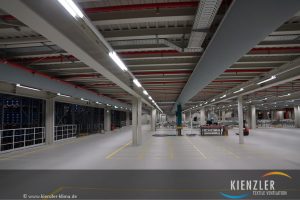
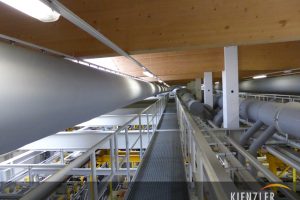
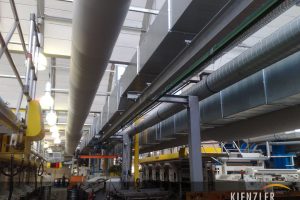
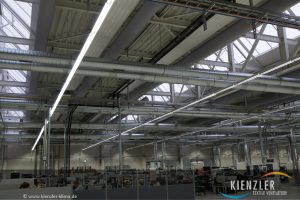
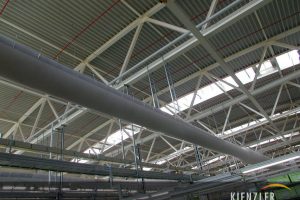
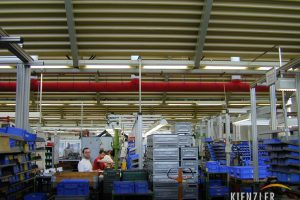
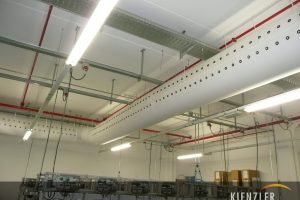
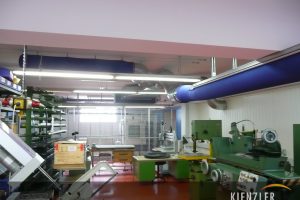
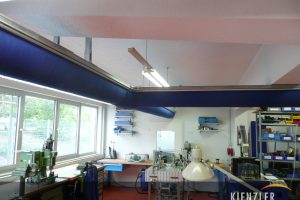
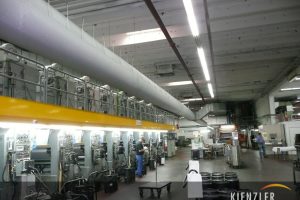
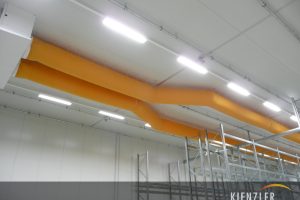
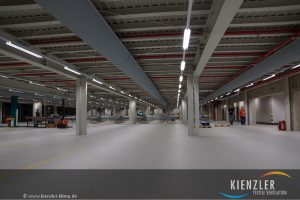
In industry and production, precisely controlled environmental conditions play a decisive role in the quality of the products manufactured and the efficiency of production processes. Legal and regulatory requirements also play a fundamental role. In this context, limit values for foreign substances in the air we breathe (MAK values) and the possibility or necessity of air conditioning in these areas are also being discussed. Textile air distribution systems offer an innovative solution to meet these requirements.
Advantages especially for industry and production:
  • Even and targeted air distribution, enabling optimum temperature and humidity control.
  • Reduction of dust and contamination through special filter technologies, which is particularly advantageous in sensitive production areas.
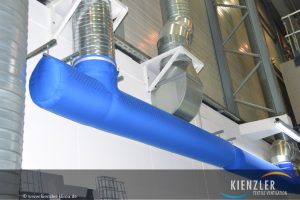
  • Flexible installation options that allow adaptation to complex production environments through bends, branches or cones, for example.
  • Energy efficiency through optimized air flow, resulting in lower operating costs.
  • Improvement of the working climate through draught-free air supply and the resulting increase in employee satisfaction and productivity.
  • Very easy to maintain thanks to simple and quick disassembly and assembly during ongoing production
In industry and production, optimum climate conditions are essential for quality and efficiency. Textile air ducts are a flexible and efficient solution to meet these requirements. They not only offer precise air distribution and improved working conditions, but also make a significant contribution to reducing operating costs. Thanks to their simple maintenance and high adaptability, they support industrial companies in continuously optimizing their production processes and making them fit for the future.
KIENZLER-Logo-CK-2023-test-2.png
DRAUGHT-FREE, HYGIENIC & VISUALLY APPEALING

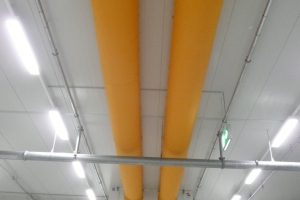
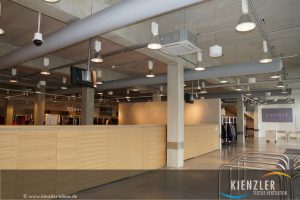
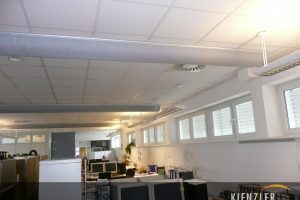
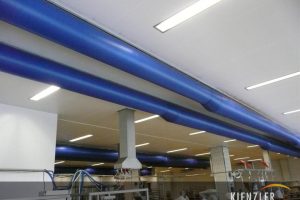
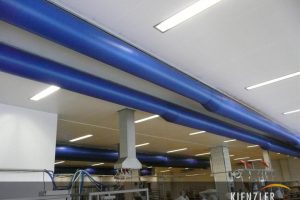
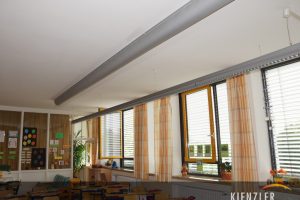
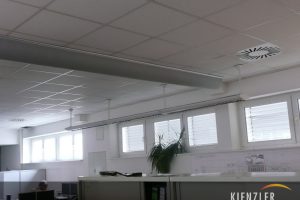
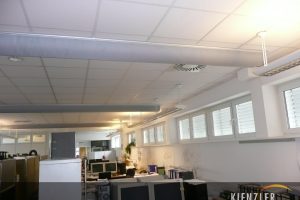
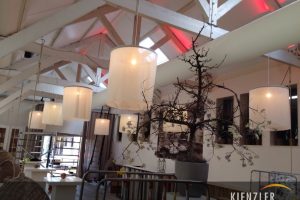
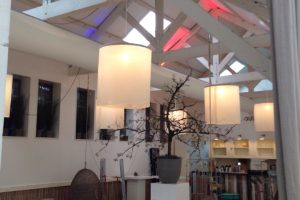
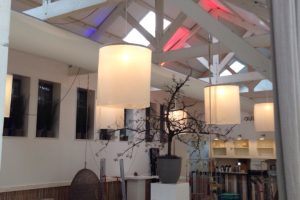
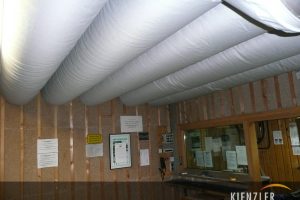
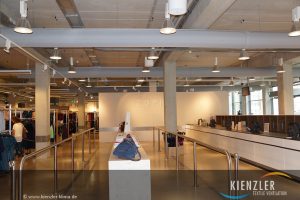
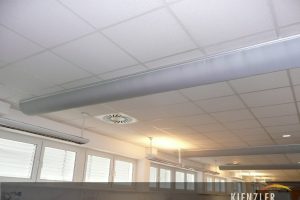
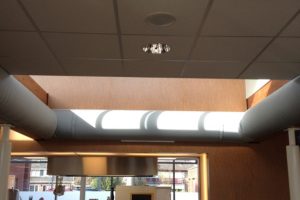
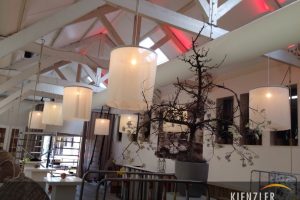
In commercial premises, sales rooms, offices or feel-good areas such as cafés or restaurants, a pleasant and healthy indoor climate is crucial for the well-being of customers and employees and for productivity in the workplace. Textile air distribution systems prevent draughts in staff and customer areas. They offer an effective and sustainable solution for air conditioning and enable design-oriented and cost-efficient planning thanks to their adaptability in terms of shape and color.

Advantages especially for commercial premises, sales rooms and offices:

  • Improving air quality and creating a pleasant indoor climate, which promotes well-being and concentration.
  • Silent operation that does not disturb the atmosphere and ensures a quiet environment.
  • Flexible design options that enable harmonious integration into the room concept.
  • Efficient air distribution that prevents draughts and ensures an even temperature in the room.
  • Energy efficiency through targeted air routing, which leads to cost savings in operating costs.
  • Easy installation and maintenance that minimizes operational interruptions and reduces long-term operating costs.
  • Lightweight (textile material with 300 g/m² and mounting material from 50 g/lm) – installation is possible on suspended or sensitive ceilings, in building corners and on other objects without any problems.

In commercial premises, sales rooms and offices, textile air hoses contribute significantly to an improved indoor climate and thus to increased satisfaction and productivity. Thanks to their low-noise operation, flexible design options and efficient air distribution, they offer an optimum solution for modern working, sales and feel-good environments. Energy efficiency and ease of use make textile air ducts an economical choice for companies that value comfort, aesthetics and sustainability.
KIENZLER-Logo-CK-2023-test-2.png
Hygiene, cleaning & purity

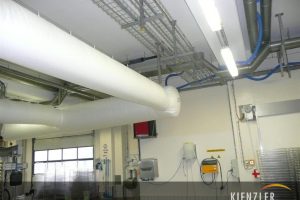
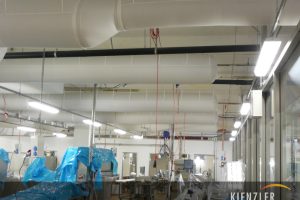
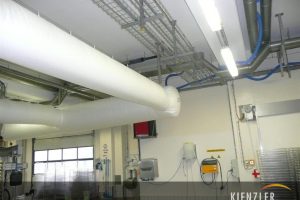
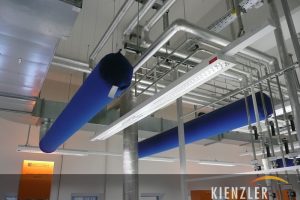
In laboratories and hospitals, strict air quality and purity controls are essential to avoid cross-contamination and ensure a sterile environment for patients and scientific research. Textile air distributions systems play a decisive role in meeting these high requirements. They make it easier to keep the air conditioning components used clean thanks to their quick and easy maintenance, as they can be cleaned, sanitized or replaced on site with little effort.

Advantages especially for laboratories and hospitals:

  • Ensure a continuous supply of filtered and clean air, which is essential for sterile working environments.
  • Avoid draughts and the associated dust turbulence that can lead to contamination.
  • Uniform air distribution that ensures constant temperature and humidity, critical for laboratory processes and patient comfort.
  • Low-noise operation that does not disturb the peace and quiet in sensitive areas such as patient rooms and research laboratories.
  • Quick and easy installation and maintenance, ensuring high operational reliability without long downtimes.
  • Exclusive use of 100% polyester materials and therefore resistant to environmental influences (light/UV radiation/microorganisms/insects) and chemicals (acids/alkalis/solvents)
  • Can be supplemented with stainless steel mounting material for high hygiene requirements
  • Energy efficiency through optimized air flow, resulting in significant cost savings.

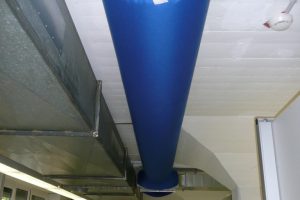
In laboratories and hospitals, textile air hoses fulfill a critical function by ensuring a highly pure and controlled air environment. Their ability to distribute clean air evenly and without drafts helps maintain sterile conditions and promotes patient comfort and the accuracy of scientific research. Thanks to their quiet operation, energy efficiency and ease of maintenance, they offer an optimal solution for healthcare and research facilities that place the highest demands on air quality.
KIENZLER-Logo-CK-2023-test-2.png
Hygiene, cleaning & precise climate

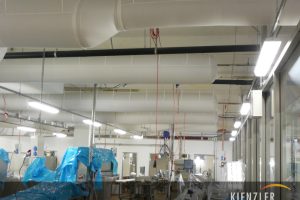
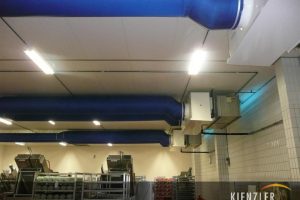
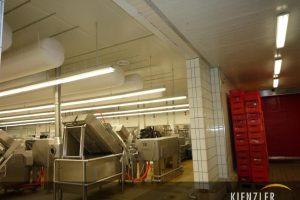
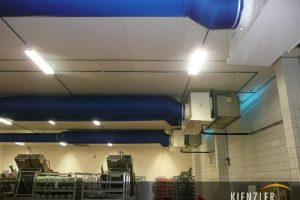
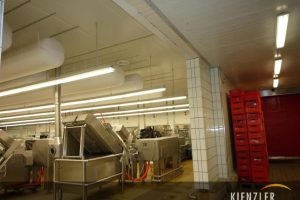
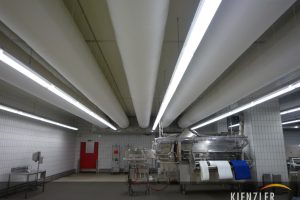
In the food industry, maintaining a controlled environment is crucial to ensure the safety and quality of products. Textile air distribution systems offer an efficient solution for meeting strict hygiene requirements and optimizing production processes at the same time. The simple and quick assembly/disassembly guarantees efficient cleaning cycles that can be carried out by the customer. This offers enormous potential savings in terms of time and costs compared to conventional components.

Advantages especially for the food industry:

  • Ensuring a constant and contamination-free air supply, which is essential for compliance with hygiene standards.
  • No condensation thanks to efficient regulation of temperature and humidity.
  • Even and gentle air distribution that supports the drying and cooling of food without damaging the product.
  • Easy cleaning and maintenance, making it easier to comply with hygiene regulations.
  • Reduction of cross-contamination through specific airflow patterns that can be adapted for different production areas.
  • High throw distances for larger food storage halls with uniform and draught-free air distribution at the same time
  • Exclusive use of 100% polyester materials and therefore resistant to environmental influences (light/UV radiation/microorganisms/insects) and chemicals (acids/alkalis/solvents)
  • Can be supplemented with stainless steel mounting material for high hygiene requirements
  • Energy efficiency through targeted air routing and distribution, resulting in lower operating costs.

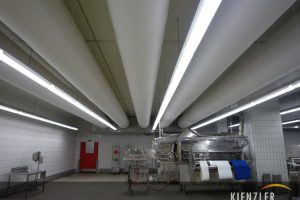
The use of textile air distribution systems in the food industry offers an ideal solution to meet the high requirements for air quality and hygiene. Through their ability to create and maintain a controlled environment, they contribute significantly to the safety and quality of food production. The benefits of even air distribution, easy maintenance and high energy efficiency make textile air ducts a valuable component of modern food processing systems, improving both the productivity and sustainability of processes.
KIENZLER-Logo-CK-2023-test-2-1.png
EFFICIENCY, cleaning & precise climate control

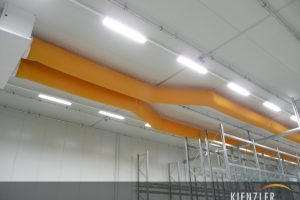
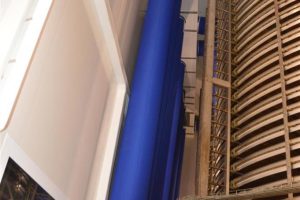
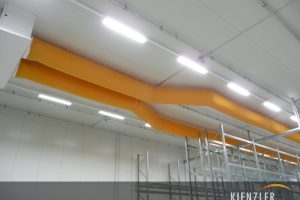
In warehouses and cold stores, maintaining specific temperature and humidity conditions is essential to ensure the quality and shelf life of stored goods. Textile air distribution systems offer an efficient solution to meet these critical requirements while optimizing operating costs.

Advantages especially for warehouses and cold stores:

  • Precise control of temperature and humidity, which is essential for the storage of temperature-sensitive products.
  • Even air distribution, which prevents cold bridges and thus protects the quality of the stored goods.
  • Prevention of condensation, which can lead to spoilage or damage to stored goods.
  • Energy efficiency through optimized air routing, which significantly reduces operating costs.
  • Flexible installation options that allow adaptation to different warehouse layouts.
  • High throw distances for larger warehouses with uniform and draught-free air distribution at the same time
  • Easy cleaning and maintenance, which supports compliance with hygiene standards and minimizes downtime.

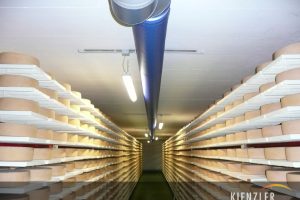
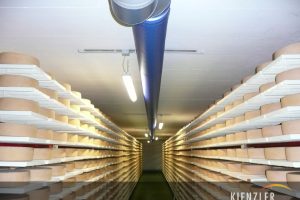
Textile air ducts offer a convincing solution in warehouses and cold stores to ensure the necessary climatic conditions efficiently and reliably. Their ability to regulate temperature and humidity precisely and distribute them evenly throughout the room contributes significantly to maintaining product quality. In addition, their energy efficiency and ease of maintenance enable cost-effective operational management. For warehouse and cold store operators, they therefore represent a valuable investment that not only ensures the quality of the stored products, but also helps to reduce operating costs in the long term.
KIENZLER-Logo-CK-2023-test-2-1.png
DRAUGHT-FREE, HYGIENIC & VISUALLY APPEALING

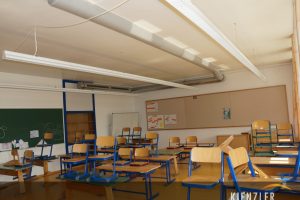
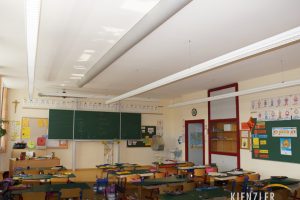
In schools and kindergartens, it is important to create a healthy and conducive learning environment that supports the well-being and concentration of pupils and young children. Textile air distribution systems offer an efficient and child-friendly solution for improving indoor air quality.

Advantages especially for schools and kindergartens:

  • Improve air quality through efficient filtration and distribution of clean air, resulting in a healthier learning environment.
  • Reduction of disease transmission through a continuous supply of fresh air, which is particularly important in rooms with high occupancy.
  • Even temperature distribution, which contributes to a comfortable learning environment and promotes concentration.
  • Low-noise operation that does not disturb the learning atmosphere and ensures a quiet environment.
  • Energy efficiency through optimized air flow, resulting in lower operating costs.
  • Easy installation and maintenance, which minimizes operational interruptions and reduces operating costs in the long term.
  • Adaptable design that enables aesthetic integration into the design of learning environments.

Textile air ducts contribute significantly to improved air quality in schools and nurseries and thus to a healthier learning and play environment. Thanks to their ability to distribute clean, fresh air evenly, they support children’s well-being and ability to concentrate. The low-noise operation and energy efficiency make them an ideal choice for educational institutions that value comfort, health and sustainability. The simple maintenance and flexible design offer additional benefits by enabling harmonious integration into the room concept and supporting long-term cost savings.

KIENZLER-Logo-CK-2023-test-2.png
draught-free, hygiene & AIMING DIRECTION

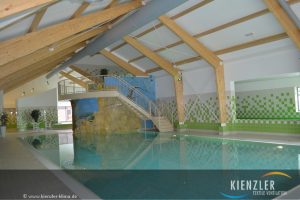
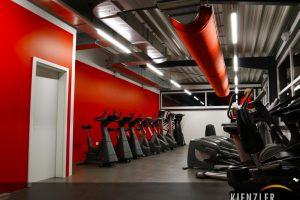
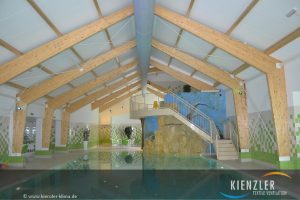
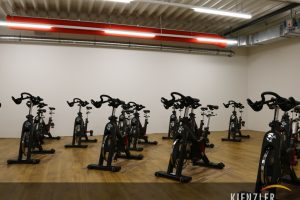
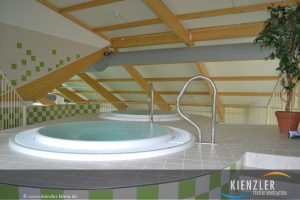
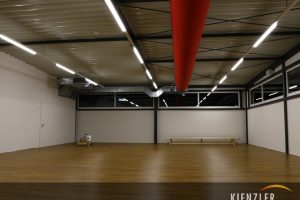
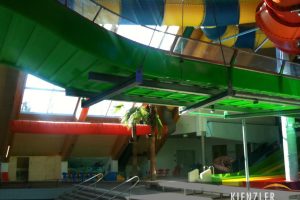
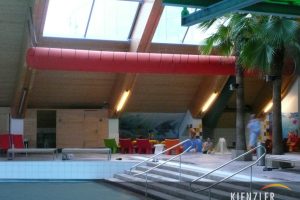
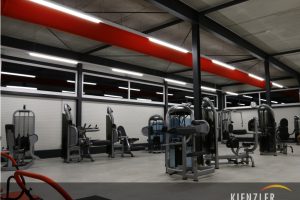
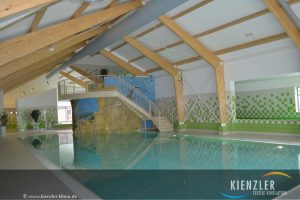
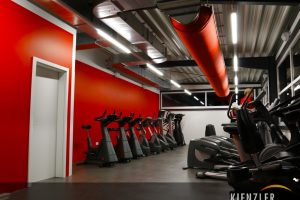
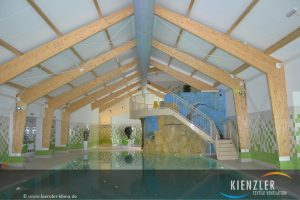
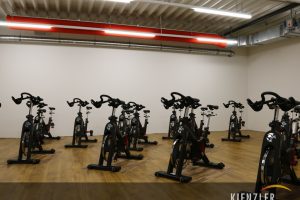
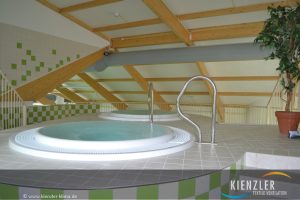
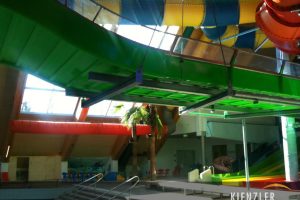
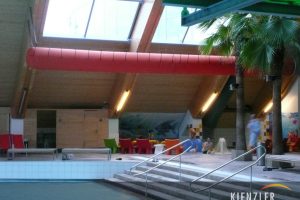
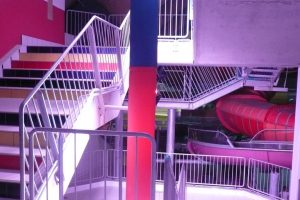
In sports and leisure facilities, such as gyms, sports halls, leisure centers or swimming pools, optimum air quality and distribution is crucial for the health and performance of users. Textile air ducts offer an effective solution for creating a pleasant and performance-enhancing climate. In addition, these areas are characterized by a sophisticated design in shape and color, while differences can be seen in the type of air flow. In swimming pools, for example, our distribution systems enable draught-free air conditioning, while at the same time allowing targeted airflow at defined points to keep glass surfaces free of condensation.

Advantages especially for sports and leisure facilities:

  • Improving air quality through efficient filtration and circulation, which is essential for the health and well-being of visitors.
  • Even and draught-free air distribution, ensuring a pleasant training environment without cold zones or unpleasant air currents.
  • Prevention of moisture build-up and bad odors, which can often be a problem in sports facilities.
  • The use of 100% polyester materials is resistant to light and UV radiation, which ensures their durability in light-flooded environments.
  • The high-strength yarns of the fabric ensure that the textile air ducts can withstand chemicals such as chlorine for water purification, aggressive acids and alkalis without compromising the integrity of the material.
  • Adaptability to different room geometries and areas of use, enabling flexible design and use of the space.
  • Energy efficiency through targeted air routing, which reduces operating costs and contributes to the sustainability of the facility.
  • Easy cleaning and maintenance, which makes it easier to comply with hygiene standards and ensures the longevity of the system.

In sports and leisure facilities, textile air ducts play an important role in creating a healthy, comfortable and performance-enhancing environment. They not only improve air quality and distribution, but also contribute to energy efficiency and lower operating costs. Thanks to their adaptability to different usage requirements and easy maintenance, they offer an optimal solution for maintaining high standards of hygiene and comfort in sports and leisure facilities.

KIENZLER-Logo-CK-2023-test-2-1.png
Draught-free, silent & targeted

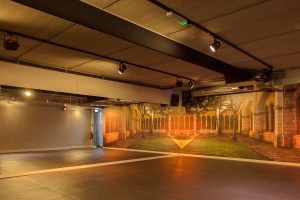
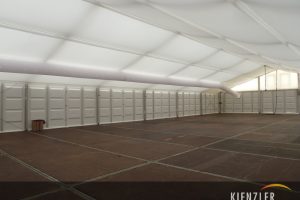
In event and exhibition halls, where large numbers of people regularly come together, it is crucial to create a pleasant and healthy atmosphere. Textile air distribution systems can play a key role here by ensuring optimum air distribution and quality.

Advantages especially for event and exhibition halls:

  • Efficient control of air quality and temperature to ensure a pleasant climate for visitors and exhibitors.
  • Even air distribution that prevents zones of stagnant air, which is particularly important in large crowds.
  • Adaptability to different event formats and sizes, enabling flexible use of the halls.
  • Reduction of noise levels, which facilitates communication between visitors and exhibitors and improves the overall experience.
  • Energy efficiency through targeted air routing and distribution, resulting in lower operating costs.
  • Easy installation and maintenance, which shortens the preparation time for events and reduces operating costs.
  • Lightweight (textile material with 300 g/m² and mounting material from 50 g/lm) – installation is possible on suspended or sensitive ceilings, in building corners and on other objects without any problems.

Textile air ducts offer an effective solution in event and exhibition halls to create a pleasant and healthy environment for a variety of events. Thanks to their ability to regulate air quality and temperature efficiently and distribute it evenly throughout the room, they make a significant contribution to the success of events. In addition, their energy efficiency and simple maintenance support the sustainability and cost-effectiveness of operations. For operators of event and exhibition halls, they therefore represent a valuable investment that not only promotes the well-being of visitors, but also helps to reduce operating costs in the long term.
KIENZLER-Logo-CK-2023-test-2.png
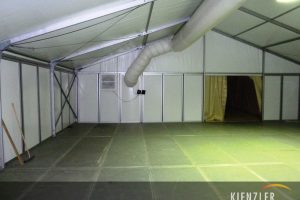
Ideal for temporary, short-term and space-saving applications

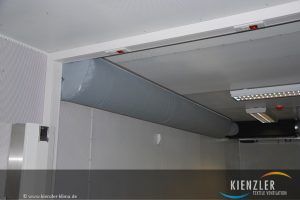
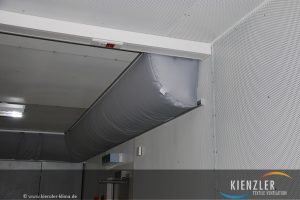
For special applications such as transport containers, container offices, tents and temporary installations where flexibility, mobility and efficiency are crucial, textile air ducts offer an innovative solution for air conditioning and ventilation.

Advantages for various special applications:

  • Flexibility and mobility: Textile air distribution systems are easy to transport and install, which is particularly useful for temporary installations.
  • Efficient air distribution: They ensure even and comfortable air distribution, which is very important in temporary or confined spaces such as containers and tents.
  • Adaptation to environmental conditions: The ability to operate efficiently in different environments from extreme outdoor temperatures to humid conditions makes them ideal for use in specialty applications.
  • Rapid response to climate requirements: Textile air ducts can respond quickly to the needs of temporary use by allowing immediate adjustment of temperature and humidity.
  • Space-saving: In confined spaces such as containers, textile distribution systems can easily be installed in corners or directly under the ceiling
  • Energy efficiency: Their efficient air distribution can help reduce energy costs, which is particularly important when energy supply is limited or costly.
  • Easy maintenance and hygiene: The ease of cleaning and maintenance helps to maintain high hygiene standards in environments that are quickly converted or changed.

Textile air distribution systems offer a flexible, efficient and adaptable solution for air conditioning and ventilation in special applications. Their advantages in terms of mobility, quick adaptability to different environmental conditions and energy efficiency make them an ideal choice for temporary or mobile facilities. Easy maintenance and the ability to maintain high hygiene standards add to the list of reasons why textile air ducts are becoming increasingly popular in these special applications.
KIENZLER-Logo-CK-2023-test-2-1-1.png
Washing service - Professional from the manufacturer
Your contact details
Information on the textile air hoses

Diameter (DN) and length

Weight (approx.) or installation code

Installation code or order number
(see label in the tube)
Select degree of soiling
Service details
Collection data

Collection date:

Number of packages*:

(max. 30kg per package)

Pick-up address:


KIENZLER-Logo-CK-2023-test-2.png
TIME-SAVING, SMOOTH IMPLEMENTATION

Textile air ducts from Kienzler Textile Ventilation stand for efficiency and customer specificity. With an average production time of just 14 days, they are manufactured individually for each customer order. This rapid production enables us to respond promptly to specific requirements and deliver customized solutions. Daily dispatch via parcel service providers ensures prompt delivery directly to the place of use.

Textile air ducts offer a further time-saving advantage during installation: thanks to various installation methods, they can always be installed in a work-optimized and therefore time-saving manner. Whether on cable systems, with suspended tracks or directly on the ceiling – installation is uncomplicated and can be flexibly adapted to the local conditions. This efficiency in installation not only shortens the installation time, but also enables rapid commissioning, which results in considerable time savings over the course of the project.

Hohe Kosteneinsparung durch Textile Luftschläuche
In der modernen Lüftungs- und Klimatechnik stehen Effizienz und Wirtschaftlichkeit an vorderster Stelle. Textile Luftschläuche bieten hier einen erheblichen Kostenvorteil gegenüber traditionellen Blechkanälen. Der erste und offensichtlichste Punkt ist die Installation: Textile Luftschläuche sind deutlich leichter als ihre Pendants aus Metall, was die Handhabung vereinfacht und die Installationskosten signifikant reduziert. Es wird weniger Personal benötigt, und die Montage kann schneller durchgeführt werden, da aufwendige Konstruktionen zur Unterstützung der schweren Blechkanäle entfallen.
Darüber hinaus sind textile Luftschläuche in der Anschaffung preisgünstiger als Blechkanäle. Die Herstellung von Textilmaterialien ist kosteneffizienter als die Verarbeitung von Metall, und der Transport der leichteren Materialien schlägt ebenfalls weniger zu Buche. Auch die Flexibilität spielt eine Rolle: Textile Systeme lassen sich einfacher an unterschiedliche räumliche Gegebenheiten anpassen, was bei starren Blechkanälen oft zu zusätzlichen Kosten für Maßanfertigungen führt.
Ein weiterer finanzieller Aspekt ist der geringere Energieverbrauch. Textile Luftschläuche können die Luft gleichmäßiger und mit weniger Widerstand verteilen, was den Bedarf an Ventilatorleistung reduziert und somit Energiekosten spart. Die verbesserte Luftzirkulation trägt zudem zu einem angenehmeren Raumklima bei, was indirekt zu einer Steigerung der Produktivität führen kann.
Schließlich sind auch die Wartungs- und Reinigungskosten bei textilen Luftschläuchen niedriger. Sie sind einfacher zu reinigen und bei Bedarf schneller auszutauschen als Blechkanäle. Dies spart langfristig nicht nur Kosten, sondern auch Zeit.

Zusammengefasst bieten textile Luftschläuche eine Reihe von Kostenvorteilen: von niedrigeren Installations- und Materialkosten über Energieeffizienz bis hin zu geringeren Wartungsaufwendungen. Diese Vorteile machen sie zu einer attraktiven Alternative in der Luftverteilungstechnik und einem Schlüsselelement für Unternehmen, die ihre Betriebskosten optimieren möchten.

Personal contact for a trusting cooperation

Always there for you personally

Offer
Request

The future of ventilation & air conditioning

Up to

60%

SAVING