Comfort climate –
without compromise
Textile-based air conditioning components
or textile air distribution systems
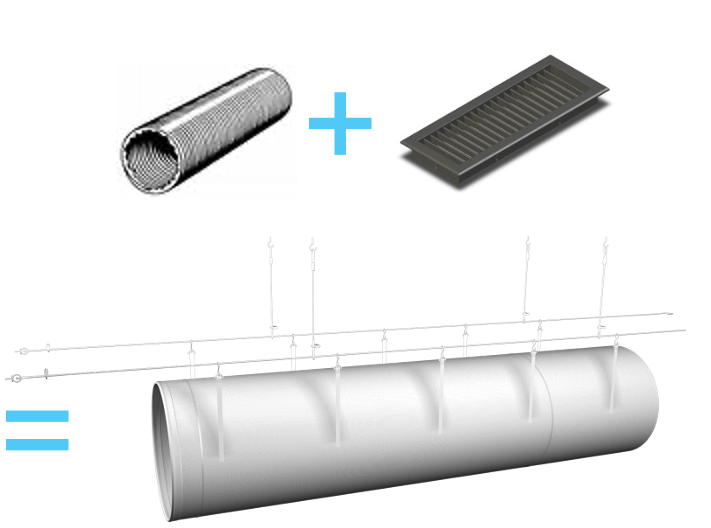
Textile air ducts are increasingly replacing conventional air conditioning components
made of sheet steel.
The advantages are obvious.
Beating
Arguments
PREDESTINED FOR COMFORT AIR CONDITIONING APPLICATIONS

Textile air distribution systems are ideal for comfort air conditioning applications as they provide draught-free and homogeneous air distribution, which increases comfort in process, work and storage areas. They enable precise temperature control for specific requirements and realize demand-based air humidification, which is particularly important in sensitive environments. This adaptability ensures an optimum indoor climate and health protection. Their flexible design also allows them to be aesthetically integrated into any room design, making them not only functional but also visually appealing.
- Application-specific temperature control
- Draught-free and even air distribution
- Application-related air humidification
Significant cost savings

Textile air distribution systems offer significant cost savings compared to traditional sheet metal ducts. They are lighter, which reduces installation costs thanks to easier handling and less assembly work. The acquisition costs are lower because textiles are cheaper to produce and transport. Their flexibility enables cost-efficient adaptation to spatial conditions. They also improve energy efficiency through optimized air distribution, which reduces operating costs. Cleaning and maintenance are easier and cheaper, which offers additional savings potential over the service life.
- Raw material-saving textile material
- Assembly-optimized system
- Maintenance-friendly cleaning
- Transportation by parcel service
Short realization times

Textile air distribution systems from Kienzler optimize implementation times thanks to specialized production, which implements individual customer orders within an average of just 14 days. These are dispatched daily via parcel service providers, which ensures fast delivery. During installation, various mounting methods enable adaptable and time-efficient installation tailored to the specific working conditions. This flexibility in installation leads to accelerated completion and commissioning, which is a significant advantage for projects where time is a critical factor.
without FUSS OR QUIBBLE
The use of textile air distribution systems is becoming increasingly important.
- AIR OUTLET OVER THE ENTIRE SURFACE
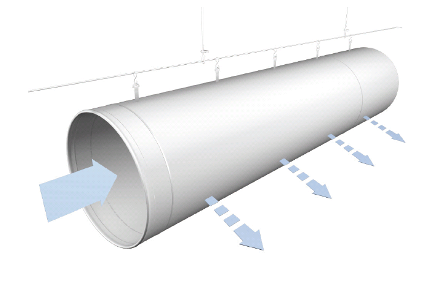
Due to the permeability of the textile material used, the air escapes at low speed.
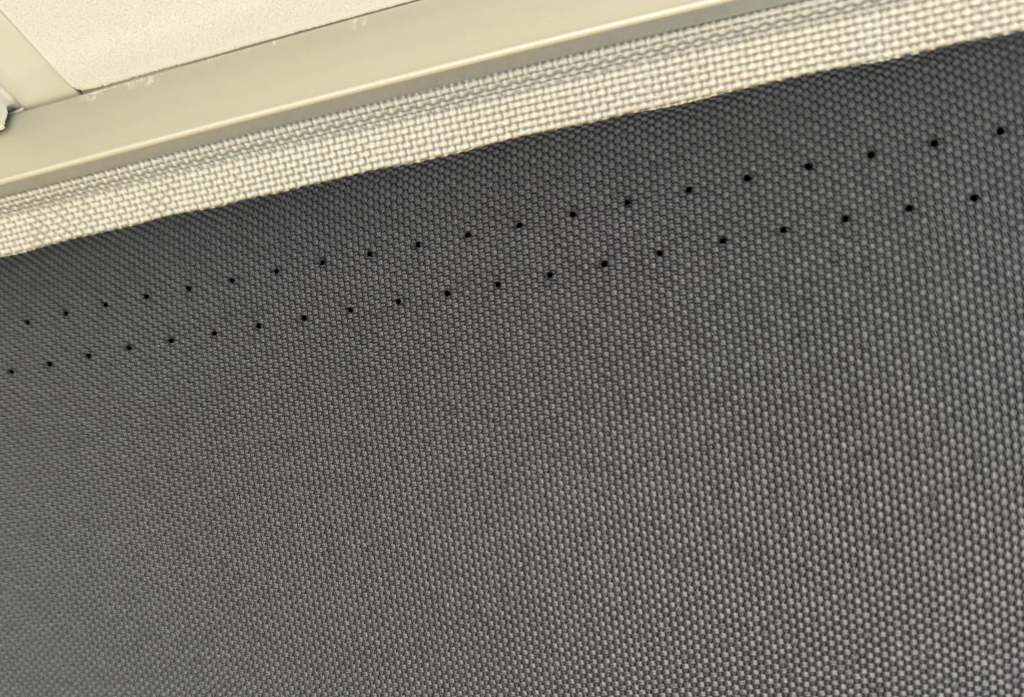
This combines the advantages of displacement and recirculation ventilation in one system.
- INNOVATIONS FOR ENHANCED FUNCTIONALITY
CONVINCING PRODUCT FEATURES
The product properties result in major advantages, especially for room and large-area air conditioning across the entire cooling and heating range.
Textile ducts / textile air hoses therefore have significant advantages and offer considerable added value compared to conventional air conditioning components
Textile air distribution systems represent a major advance in the efficient air conditioning of rooms and offer significant cost savings in addition to improved air quality. By using textiles instead of conventional sheet metal, material and installation costs can be reduced by up to 60%. The quick and easy installation of these systems contributes to a drastic reduction in initial expenditure. In addition, their efficient operation enables long-term savings.
Advantages of cost savings with textile air ducts:
- Reduced material costs: Significantly cheaper than traditional sheet metal systems.
- Lower installation costs: Simple and time-saving installation.
- Effective hygiene treatment: easy to clean thanks to the material properties.
- Easy to maintain: The simple handling during disassembly and reassembly makes maintenance easier and less time-consuming.
- Energy efficiency: Quickly reaches the desired room temperature.
- Long-term reduction in operating costs: Efficient use of cooling and heating units.
In summary, textile air ducts are not only inexpensive to purchase, but also convincing when it comes to reducing operating costs. They represent a sustainable investment that offers both economic and ecological benefits by saving energy and improving the indoor climate at the same time.
Draught-free air distribution using textile air ducts is a key method for advanced indoor climate management. The special nature of the textile material means that conditioned air is distributed gently and evenly throughout the room. This principle prevents unpleasant draughts and ensures a constantly pleasant indoor climate. Prior to installation, a tailor-made plan is drawn up in close consultation with the customer in order to precisely meet the ventilation requirements and maximize comfort.
Advantages of draught-free air distribution:
- Health-promoting: Reduction of draught-associated health risks.
- Uniform room temperature: avoidance of unwanted hot or cold zones.
- Customer-oriented solutions: Individual adaptation to spatial conditions.
- Increased comfort: avoiding draughts increases the feel-good factor.
- Energy efficiency: Optimum utilization of the supplied conditioned air.
In summary, textile air distribution systems offer an advanced solution for creating a draught-free and well-tempered environment. The individual design of each hose guarantees precise and needs-based air conditioning that meets both the energy and ergonomic requirements of modern premises.
Textile air distribution systems offer efficient and, above all, noiseless air distribution, which makes them ideal for use in sensitive environments such as offices, libraries or recording studios. he technology makes it possible to distribute air gently and evenly, avoiding high air speeds and the associated noise pollution. Especially in times when acoustic comfort is becoming increasingly important, textile air ducts are an innovative solution for creating a quiet and pleasant atmosphere.
Our own innovative software, developed in cooperation with a university, enables us to calculate sound levels precisely. This technology simulates acoustic conditions and thus optimizes the air flow to minimize background noise.
Advantages of silent air distribution through textile air ducts:
- Minimal noise emission: Low air speeds reduce operating noise.
- Sound absorption: textile material reduces room reverberation and noise levels.
- Improved acoustic comfort: Ideal for noise-sensitive environments.
- Adaptability: Suitability for special requirements in acoustics.
- Aesthetic design: unobtrusive integration into the room architecture.
- Energy efficiency: Effective air distribution without the need for high speeds.
In summary, textile air distribution systems are not only a means of regulating temperature, but also a tool for creating a calm environment. Their ability to absorb noise while ventilating effectively makes them an ideal choice for places where peace and quiet is essential. They combine functionality with comfort and thus contribute to an improved quality of life and work.
Textile air distribution systems are true all-rounders when it comes to creating ideal indoor climate conditions. They offer customized solutions for heating, cooling, ventilation and humidification, making them an indispensable part of modern ventilation systems. The ability to tailor the system precisely to the specific needs of each room guarantees optimum air distribution and quality. The flexibility and efficiency of these systems make them the first choice for demanding climatic requirements. This is particularly useful when switching between heating and cooling scenarios. An electrically controlled actuator can be used to easily switch between the discharge of cold air, which is distributed throughout the room (sources), and warm air, which is directed in a specific direction (directional).
Advantages of textile air ducts for heating, cooling, ventilation and humidification:
- Customized adaptation: Individual configuration through different types of perforation.
- Efficient air distribution: Optimum air trajectory for uniform room air conditioning.
- Combined ventilation methods: Utilizing the advantages of displacement and recirculation ventilation.
- Targeted climate control: Precise control of air flows for heating or cooling.
- Flexible use: Combi tube allow different types of air distribution in one system.
- Intelligent control: Electric actuators for precise climate control.
- Optimal cooperation: specialist planners ensure the exact design for the application.
- Energy efficiency: Reduced energy consumption through targeted air distribution.
In summary, our textile air ducts offer outstanding flexibility and efficiency in the air conditioning of rooms. Their ability to adapt to a wide range of requirements while saving energy makes them an intelligent choice for modern building management. They not only guarantee comfort, but also contribute to sustainable operation.
The installation of textile air distribution systems is a prime example of user-friendliness and efficiency. With a sophisticated product design that supports uncomplicated installation, our products enable quick and easy installation. This saves time and costs, especially in complex or difficult-to-access environments. The modular design with zippers for longer sections also facilitates handling during assembly and maintenance – a clear advantage in the dynamic world of construction projects.
Advantages of the easy installation of our textile air ducts:
- Self-installation: Simple installation with minimal manpower.
- Time saving: Simple assembly of the components saves valuable working time.
- Flexibility: Subsequent installation in existing building sections possible.
- Modular design: Easy to connect and disconnect with zippers.
- Less work: Maintenance-friendly handling during cleaning.
- Adaptability: Easy integration into existing ventilation systems.
- Reusability: Easy dismantling enables reuse at other locations.
In summary, our textile air distribution systems are characterized by their outstanding ease of installation, which simplifies and speeds up the installation process. They are not only cost-efficient and flexible to use, but also designed in such a way that they can be adapted or implemented with minimal effort. This offers our customers significant added value and supports agile operations management.
Fire protection is a decisive factor in modern building safety. Our textile products rely on permanent fire protection solutions that are deeply anchored in the fiber structure. We only use branded yarns from renowned German manufacturers that are known for their durability and reliability. These yarns retain their flame-retardant properties permanently, even after repeated washing or many years of use, which guarantees our customers maximum safety.
Advantages of the permanent fire protection of our textile products:
- Long-term safety: No loss of fire protection function over time.
- Low maintenance: No regular after-treatment with fire retardants necessary.
- High-quality materials: use of branded yarns “Made in Germany” for the highest quality.
- Reliability: Constant flame retardancy even after frequent washing.
- Environmentally friendly: no subsequent chemical treatments.
- Health protection: No release of potentially harmful substances due to chemical fire protection agents.
- Cost efficiency: Long-term savings thanks to durable solutions and lower maintenance costs.
- Certified safety: compliance with strict fire protection standards and regulations.
In summary, our textile products with permanent fire protection offer a reliable and low-maintenance solution that meets the highest safety standards. Investing in our high-quality materials pays off through lasting durability and protection and thus contributes to long-term value retention. Our customers benefit from sustainable quality that combines safety and a sense of responsibility.
In production facilities and warehouses, protection against condensation and corrosion is essential not only for the longevity of the infrastructure, but also for the manufacturing processes and stored products. Our textile air distribution Systems with their advanced PES fabric technology effectively protect against moisture and therefore offer comprehensive protection for the entire operating environment. The special fabric structure prevents condensation and the optional stainless steel components offer maximum corrosion protection to ensure the quality and safety of production processes and products.
Advantages of our textile air ducts with regard to condensation and corrosion:
- No condensation: Thanks to the permeable microstructure of the PES fabric.
- Suitability for dew point-critical areas: Safe use in demanding environments.
- Anti-corrosive materials: All standard components are corrosion-resistant.
- Optional stainless steel components: For the highest demands on corrosion protection.
- Longer service life of the systems: by avoiding moisture damage.
- Reduced maintenance costs: Less downtime and repairs due to corrosion.
- Wide range of applications: Ideal for a variety of industrial and commercial applications.
- Quality assurance: High-quality workmanship and choice of materials “Made in Germany”.
In summary, our textile air distribution system offer a reliable solution to prevent condensation and corrosion, which not only protects the infrastructure, but also safeguards the manufacturing processes and the quality of the products in the room. This leads to an increase in value and continuous operational reliability.
The light weight of the textile air ducts and installation accessories offers a number of advantages and makes the installation process considerably easier. On average, the textile material weighs around 300 g/m², while the assembly material weighs more than 50 g/lm. This feature enables problem-free installation even on ceilings with a low load-bearing capacity and in sensitive areas of a building without damaging or impairing the structure.
Further advantages of this lightweight construction are
- Reduced static load: Lighter materials exert less pressure on the fixing points, which increases the longevity of the structure.
- Less support structure required: Heavy supporting structures can often be dispensed with, which saves material costs and improves aesthetics.
- Faster installation time: Due to the lower weight, the ducts can be installed more quickly and with less manpower.
- Increased safety during installation: The risk of injury or accidents during installation is minimized due to the lower weight.
- Design flexibility: The lower mass opens up more options when designing the air flow, as it is less restrictive in terms of weight.
- Lower transportation effort and costs: Compared to sheet metal ducts, there are significantly lower transportation costs, as textile distribution systems are lighter and more compact.
- Optimized storage space: Textile ducts require less storage space due to their flexibility and compressibility, which reduces storage costs and increases efficiency.
In summary, the use of lightweight textile air distribution systems and assembly materials not only simplifies installation, but also offers long-term structural benefits and reduces the risk of accidents at work.
Textile air distribution systems offer an optimal solution for companies that value cleanliness and hygiene. Their easy dismantling makes them an ideal partner for industries where regular cleaning is essential, such as food processing. With increasing hygiene requirements, such practical properties are invaluable. Our cleaning service complements this offer with a convenient complete service from collection to return delivery.
Advantages of cleaning and hygiene treatment of textile air ducts:
- Easy to maintain: Easy disassembly enables regular cleaning without great effort.
- Cost efficiency: Easy cleaning results in low maintenance costs.
- Hygiene compliance: Meets the high hygiene standards required in sensitive areas such as the food industry.
- Longevity: Regular cleaning extends the service life of the ducts.
- Convenient service: Our all-round carefree package includes collection, cleaning, hygiene treatment and shipping.
- Global availability: Worldwide shipping enables use in internationally operating companies.
- Quality assurance: Professional hygiene treatment guarantees consistently high quality.
- Environmentally friendly: reuse instead of buying new saves resources and protects the environment.
In summary, the professional cleaning and hygiene treatment of textile air distribution systems offers an efficient and sustainable way of keeping operations hygienic and cost-effective. This service helps companies to comply with the growing hygiene regulations in the long term and helps to maintain the value of the systems.
In modern architecture, not only functional but also aesthetic aspects play a decisive role. In this context, our textile climate components are a synthesis of technology and design. They fit seamlessly into the sophisticated design of contemporary buildings and offer a flexible, cost-efficient solution. The possibility of individually dyeing, printing and embroidering textile air ducts opens up new horizons in interior design.
Advantages of design-oriented textile climate components:
- Aesthetic integration: Seamless integration into the overall design of the room.
- Individual design: adaptation to company colors or corporate design possible.
- Versatility: Wide range of applications thanks to different fabrics and finishing techniques.
- Atmospheric enhancement: Increased room quality through attractive appearance.
- Functionality meets design: no compromise between aesthetics and performance.
- Sustainability: Durable material that can also be designed to look timeless.
- Cost efficiency: Economically attractive thanks to long service life and low maintenance costs.
In summary, our textile climate components offer a perfect blend of functional efficiency and design freedom. They create an atmosphere in which well-being and aesthetic appeal go hand in hand. This concept supports future-oriented architecture that emphasizes both comfort and design while remaining economical.
- COVERAGE OF ALL APPLICATIONS
USABLE EVERYWHERE
- ISOTHERM

Air supply without temperature difference for air exchange at constant
Room temperature.
- COOLING

Air supply with undertemperature
to dissipate heat loads.
- HEATING

- COOLING & HEATING COMBINED